Python is one of the most popular programming languages in the world and is widely used in software development, artificial intelligence, data science, automation, and robotics.
This 12-week course is designed for students who want to learn real text-based programming while also seeing their code come to life through robotics.
Students do not need previous Python experience to enroll. We will start from the fundamentals, including variables, operators, conditional statements, loops, functions, classes, and debugging. Students should be comfortable with basic mathematics and logical problem solving. Some exposure to Algebra concepts is helpful.
Unlike a traditional introductory programming course, students will not only write programs on the computer. As the course progresses, they will use Python and Pybricks to program a virtual LEGO SPIKE robot, allowing them to immediately see how their code controls movement, turns, sensors, and autonomous robot behavior.
The course follows a simple learning cycle:
Learn → Code → Simulate → Debug → Improve
Students will first develop computational thinking and problem-solving skills through Python programming. They will then apply those skills in a virtual LEGO SPIKE robot simulator, where they can practice robotics programming without needing a physical robot at home.
Later in the course, students will learn Pybricks, a Python-based programming environment for LEGO SPIKE Prime and other LEGO robotics systems. They will write programs that make robots move precise distances, turn, react to sensors, repeat actions, and complete autonomous missions similar to those used in robotics competitions.
Artificial Intelligence will also be introduced as a modern programming assistant. Students will learn how to use AI tools to explain code, understand error messages, brainstorm solutions, and assist with debugging. More importantly, students will learn that AI-generated code must still be understood, tested, and verified by the programmer.
This class can be challenging, but it is also highly rewarding for students who are willing to experiment, think through problems, and learn from mistakes. By the end of the course, students will have developed a strong foundation in Python programming, computational thinking, debugging, and introductory robotics engineering.
In this course, students will:
- Learn fundamental Python syntax and programming concepts
- Work with variables, strings, numbers, and operators
- Use conditional statements such as if, elif, and else
- Use for and while loops to solve repetitive problems
- Organize and reuse code with functions
- Work with lists, dictionaries, and other basic data structures
- Learn introductory object-oriented programming with classes
- Develop testing and debugging skills
- Read and understand Python error messages
- Use a virtual LEGO SPIKE robot simulator
- Program robot movement using Python and Pybricks
- Use loops and functions to create reusable robot behaviors
- Introduce sensors and autonomous decision making
- Solve robot navigation and mission challenges
- Use AI tools appropriately to help understand, debug, and improve code
- Complete a final Python robotics project
Pre-requisites
- No previous Python experience is required.
- Students should be comfortable using a computer and should have a reasonable foundation in mathematics and logical thinking. Younger students who are unsure whether the course is appropriate may take the course diagnostic test.
12-Week Course Topics
Python Fundamentals
- What is computation?
- Python syntax and variables
- Numbers, strings, and operators
- Input and output
Branching and Iteration
- Boolean expressions
- Conditional statements
- for loops
- while loops
- Problem-solving with repetition
Decomposition and Abstraction
- Functions
- Parameters
- Return values
- Breaking large problems into smaller problems
Python Data Structures
- Strings
- Lists
- Tuples
- Dictionaries
- Mutability and basic data organization
Object-Oriented Programming
- Objects
- Classes
- Attributes
- Methods
- Introduction to abstraction through robot objects
Testing and Debugging
- Syntax errors
- Runtime errors
- Logic errors
- Exceptions
- Reading tracebacks
- Testing and troubleshooting programs
Python Robotics
- Introduction to the virtual LEGO SPIKE robot
- Pybricks programming
- Motors and movement
- Distance and turning
- Robot geometry and calibration
- Reusable movement functions
Sensors and Autonomous Programming
- Sensor input
- Conditional robot behavior
- Loops with sensors
- Line and obstacle detection
- Autonomous navigation
AI-Assisted Programming
- Using AI to explain code
- Asking AI useful programming questions
- Debugging with AI assistance
- Evaluating AI-generated code
- Testing and verifying AI suggestions
Final Project
Students will combine Python programming, debugging, robot movement, sensors, and problem-solving to complete an autonomous robot mission or fun project of their own.
Course Goal
The goal of this course is not simply to memorize Python syntax.
Students will learn how to:
Think about a problem → design a solution → write code → test it → find problems → improve the solution.
By connecting Python programming with virtual and LEGO robotics, students can see that computer code is not just text on a screen—it can control machines, solve real problems, and turn their ideas into actions.
Learn Python. Program a (virtual) robot. Solve real challenges.
Mr. Ling is a software engineer and educator with extensive experience in software development, engineering education, and youth robotics.
He currently works as a Software Engineer at Garmin International and also serves as an Adjunct Faculty member in the Computer Science Department at Southern New Hampshire University (SNHU) and the Physical Science and Engineering Department at Chandler-Gilbert Community College (CGCC).
He holds a Master of Science degree from the Electrical, Computer, and Systems Engineering Department at Rensselaer Polytechnic Institute (RPI) in Troy, New York.
In addition to his professional and college teaching experience, Chao has been actively involved in FIRST LEGO League (FLL) for many years as a coach and mentor at Hope Chinese School. He has coached multiple FLL teams and led teams to the FIRST LEGO League World Championship in Houston in multiple seasons.
His teaching approach combines computer science fundamentals with hands-on engineering and problem solving. In this course, students will learn not only how to write Python code, but also how to apply programming concepts to robotics, simulation, debugging, and real-world engineering challenges.
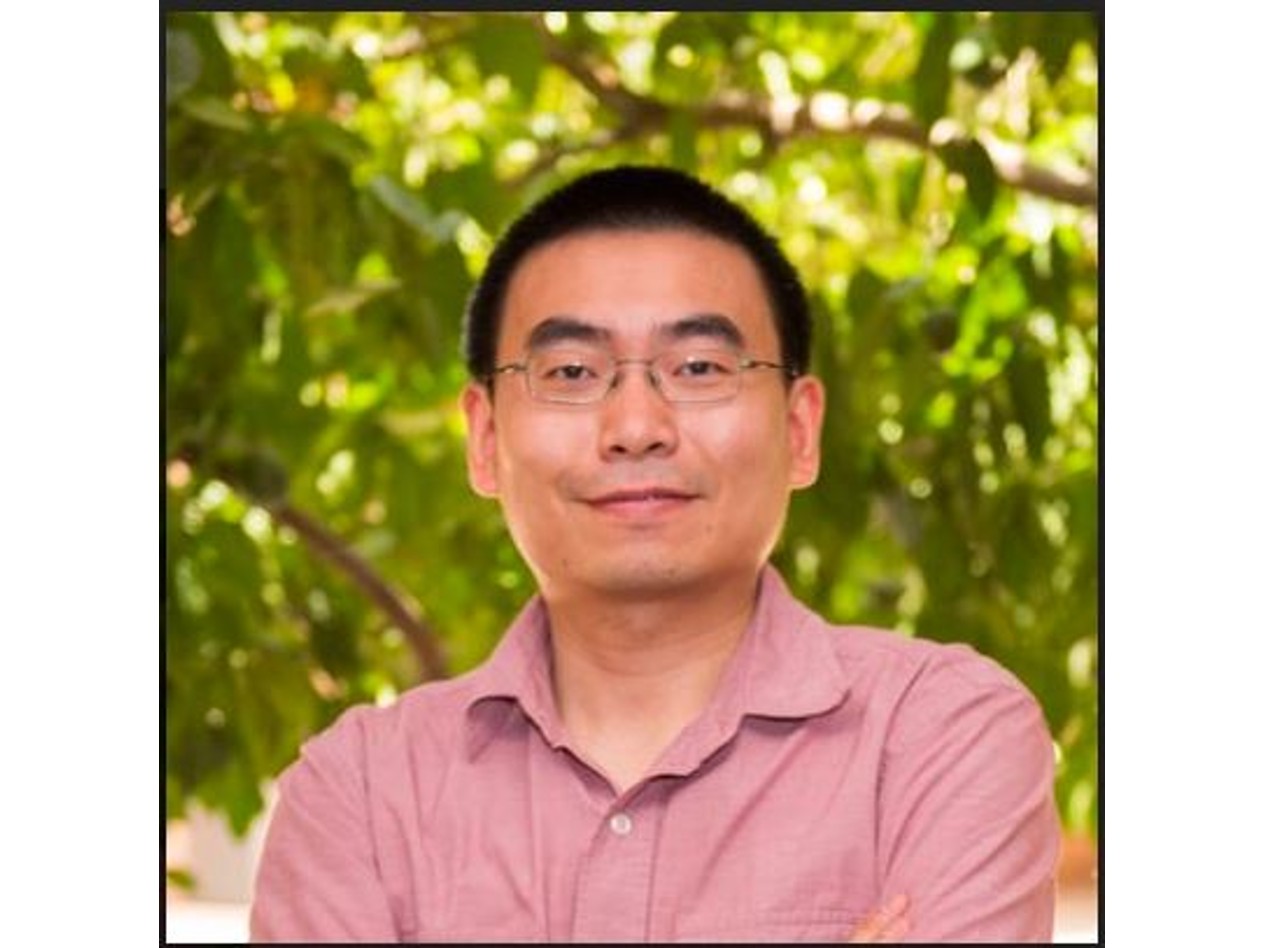
凌老师是一名具有多年软件开发、大学教学和青少年机器人教育经验的工程师和教师。
目前任职于 Garmin International,担任软件工程师(Software Engineer),同时担任 Southern New Hampshire University(SNHU)计算机科学系兼职教师(Adjunct Faculty),以及 Chandler-Gilbert Community College(CGCC)物理科学与工程系兼职教师。
凌老师毕业于纽约州 Troy 的 Rensselaer Polytechnic Institute(RPI,伦斯勒理工学院)Electrical, Computer, and Systems Engineering(ECSE)系,获得硕士学位。
除软件工程和大学教学工作外,凌老师多年来一直参与 FIRST LEGO League(FLL)青少年机器人竞赛,并在 Hope Chinese School 担任 FLL 教练和导师。多年来,他曾带领多支 FLL 队伍晋级并参加在美国休斯敦举行的 FIRST LEGO League World Championship 世界锦标赛。
凌老师的教学注重将 计算机科学基础、工程实践和实际问题解决能力 相结合。课堂不仅教授 Python 编程语法,更强调如何将编程应用到机器人控制、虚拟仿真、调试、算法思维和实际工程挑战中。
希望学生通过这门课程不仅能够“学会写代码”,更能够逐步学会:
分析问题 → 设计方案 → 编写程序 → 测试调试 → 不断改进
从而培养真正的计算思维、工程思维和独立解决问题的能力。
If you do not find the date/time you are looking for or have a question, click above button to contact the provider.
Risk-Free Satisfaction Guarantee
If the first lesson doesn’t meet your expectations, we’ll issue a FULL refund. No Refund after 2nd lesson.
{{item.programName}}


